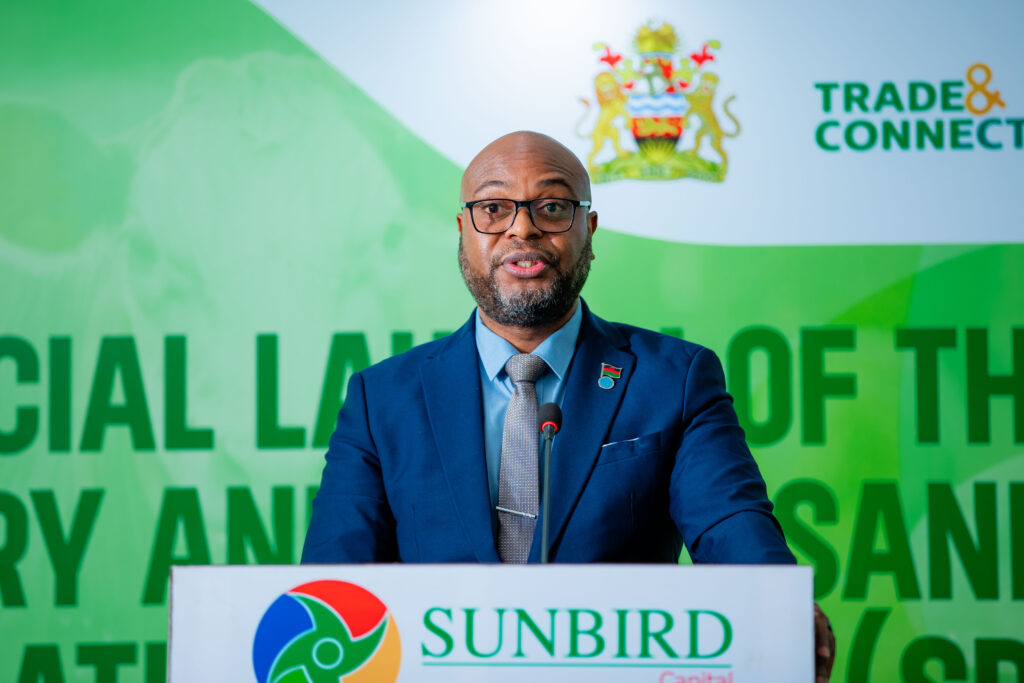
LILONGWE – Malawi on Wednesday, 20 May 2026 officially launched the Sanitary and Phytosanitary Information System (SPSIS), a modern digital platform designed to streamline the issuance of certificates, licences and permits for plant and animal products, significantly reducing delays and costs in cross-border agricultural trade.
The launch took place at Capital Hotel in Lilongwe, presided over by Deputy Minister of Agriculture, Irrigation and Water Development, Honourable Thoko Tembo, MP. The event was attended by senior government officials, representatives from the World Bank, exporters, importers, and members of the press.
In his speech, Hon. Thoko Tembo highlighted the critical role of agriculture in Malawi’s economy, noting that the sector contributes about 25% to GDP and accounts for roughly 90% of export earnings. He emphasized that the previous manual system used by the Department of Agricultural Research Services (DARS) and the Department of Animal Health and Livestock Development (DAHLD) had created several bottlenecks.
“Exporters and importers have been facing challenges including difficulty in application for distant stakeholders, risk of forgery, lack of integration with payment platforms, and absence of a customer complaints portal,” the Deputy Minister said.
The SPSIS, developed with support from the World Bank-funded Southern Africa Trade and Connectivity Project (SATCP), aims to address these issues through full digitization. Key benefits include faster processing of sanitary and phytosanitary certificates, the ability to submit applications online from anywhere in the country, enhanced system-based validations to reduce fraud, integration with e-payment platforms, and the generation of reliable statistical data for policy-making.
SATCP Project Manager Hastings Ngoma described the system as a “transformative milestone” in Malawi’s trade facilitation agenda. He announced that the project invested US$2.8 million in the initiative, which includes supporting ICT infrastructure.
“The new SPSIS will digitize and automate key processes, bringing efficiency, transparency, and accountability to SPS management,” Ngoma said. “It will enable faster processing of applications, real-time tracking, improved collaboration, better risk mitigation, and full compliance with international standards.”
The system maintains separate instances for DARS (plants and plant products) and DAHLD (animals and animal products) while operating on a shared robust platform. It was successfully delivered by consultant Mauritius Network Services (MNS) and MITRA in close collaboration with the two departments.
Ngoma urged the implementing departments to take full ownership of the system, invest in change management and staff training, and develop a sustainability plan to ensure its long-term maintenance beyond the project’s lifespan.
The launch marks a significant step toward modernizing Malawi’s quality infrastructure and enhancing the competitiveness of its agricultural exports in regional and international markets.